
"A Regular Dream World"
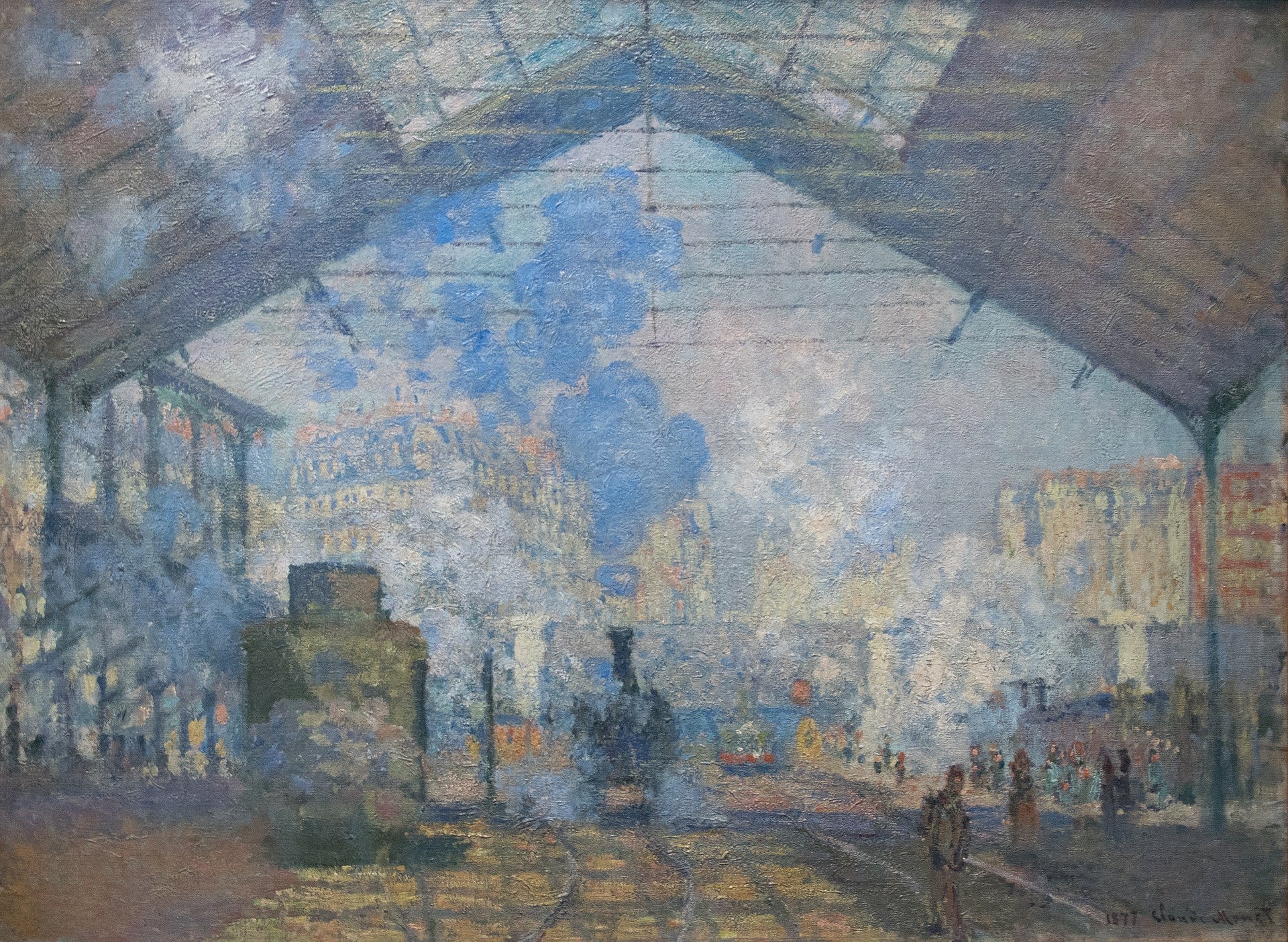
Monet at the Train Station

“Poor blind idiots. They want to see everything clearly, even through the fog!”
— Claude Monet
The Seine is not a mighty river. It has no stretches of cataracts, no high mountain headwaters. It is a lazy river, good for learning how to sail or transporting goods by barge. The basin draws water from Burgundy, Champagne and Île-de-France, all tributaries eventually meeting in Paris. From Paris, the Seine snakes its way west through the rolling green hills of the Normandy landscape finally meeting its great salty reward in the cold waters of the Atlantic at Le Havre. The entire Seine River Watershed is about the size of the state of South Carolina. It is no Volga or Mississippi. But for many painters of nature in 19th century France, it represented their entire world.
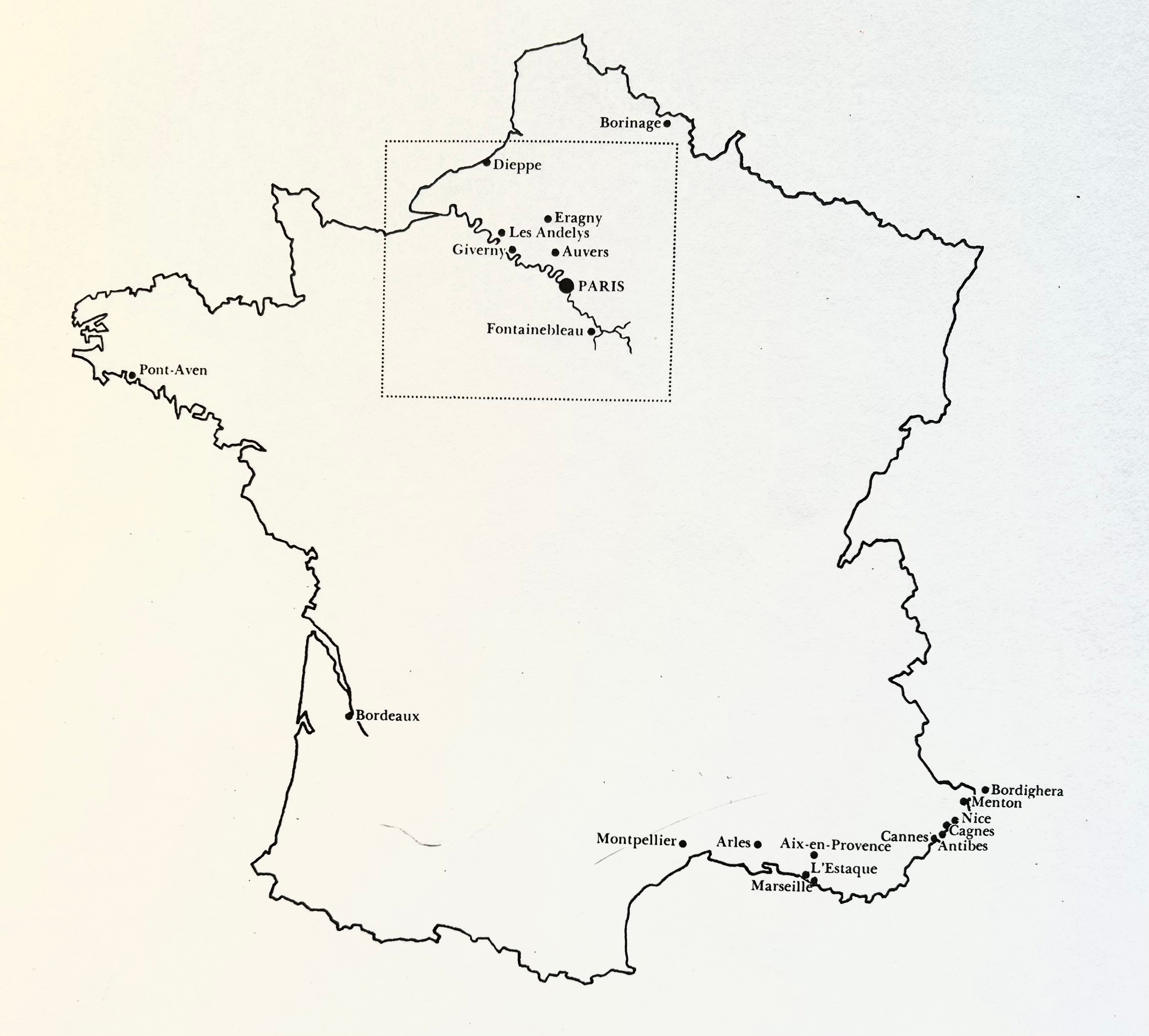
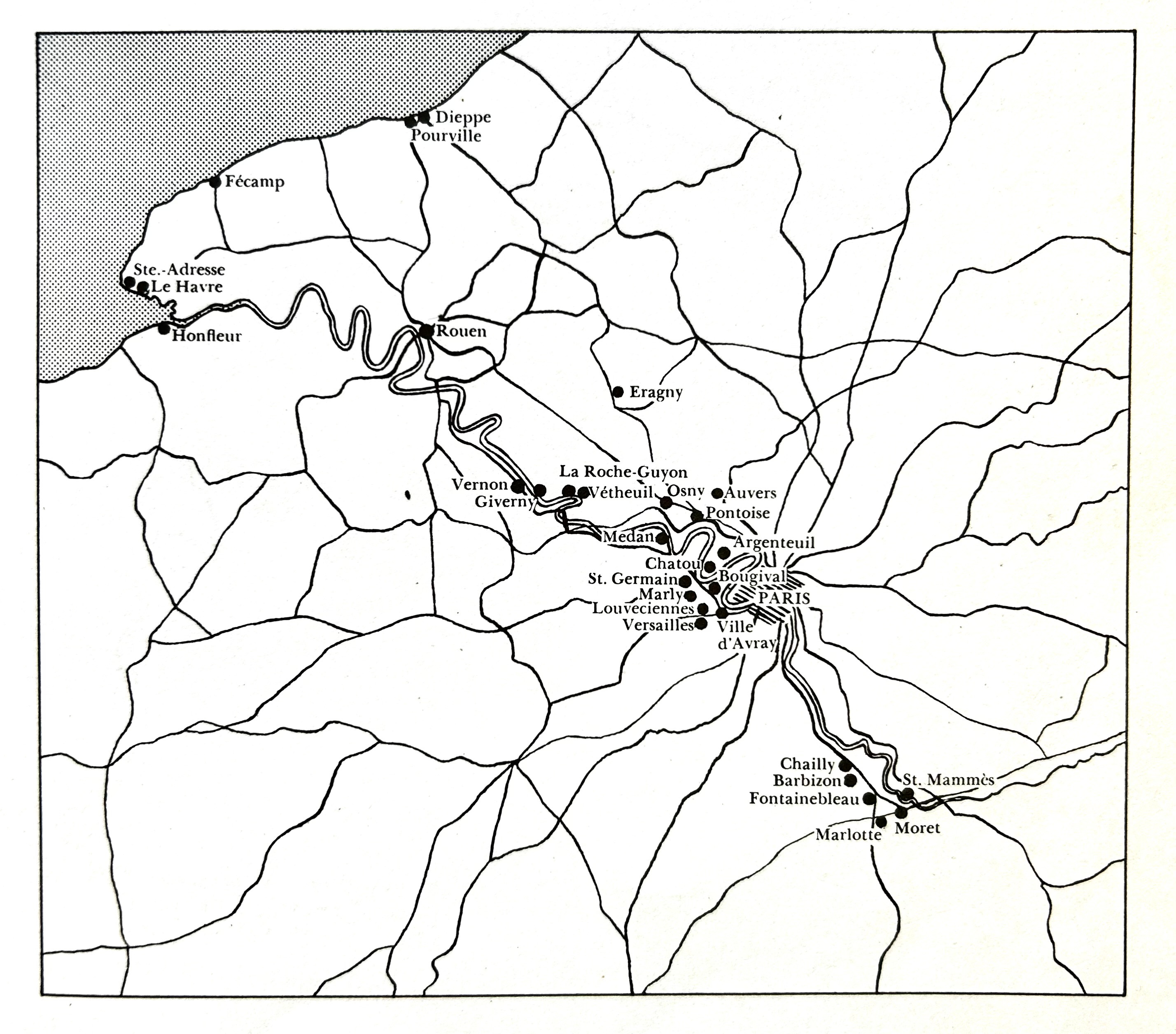
Paris as the great city was the rendezvous point, the place for the artists to congregate and head out on painting sorties. Whether for days, weeks, months or years, they set out up the tributaries, down-river or perhaps all the way out to the edge of the frontier on the sea cliffs looking out into the abyss; however long they stayed away they would make their way back to the urban center to present their paintings as pelts to the prospecting public to be accepted or denied.
But they were not actual fur trappers, and their means of travel was not always by boat, if very much at all. To get anywhere by land back then you had two main options, by horse-drawn coaches, or by the modern rail.
In 1877, Paris had six major train stations, or gares. There was the Gare de Lyon, the connector to the South, the Midi, Italy and all of the Mediterranean world. The Gare du Nord was the artery to The Netherlands and the sea ports to England. The Gare de Montparnasse and the Gare d'Austerlitz would get you to southwestern France and Spain; the Gare de l’Est to Germany. And then there was the Gare Saint-Lazare. This was the iron spine of the Seine River waterway. It carried Parisians to pleasant towns of leisure and all the way out to the coast for weekend holidays. The terminus was Le Havre, and this was the hometown of Claude Monet.
The sea was always present in Monet’s life. Yet as a young man in pursuit of his artistic dreams, he departed from his coastal environment and made his way up to Paris. In all likelihood, he came by train and in 1859 his threshold to this urban center would have been the Gare Saint-Lazare.1
This was his jumping off point into the great unknown. Almost eighteen years later, Monet would come back to the gare, not to catch a train, but to paint it.
The State of the Art World in 1877
From very early on in his art career his practice had been an incessant study of nature through painting, and an incessant study of painting through nature. First, he found his likeminded peers amongst the open studios and the cafés. They were drawn to their heroes: Delacroix, Corot and the Barbizon School painters. They followed their footsteps into the Forest of Fontainebleau. Under the trees they studied spaces and light. In 1865, Monet received some early recognition hanging two seascapes in the official Salon which happened to be directly next to Manet’s Olympia.2 Manet was not happy to receive compliments about his seascapes given by those who mistook him for the young unknown.
The end of the 1860s and the beginning of the 1870s was a time of unifying rebellion. The bohemian artists were met with continual rejection from the official Salon. They refused to assimilate to the aesthetic fashion of the academy. The rebels formed an official group and put on their own exhibit free of the censorship of the governing bodies. The first official show of The Independents took place in 1874. It was from a satirical mockery of one painting in the show called Impression: Sunrise that the group finally got their name.
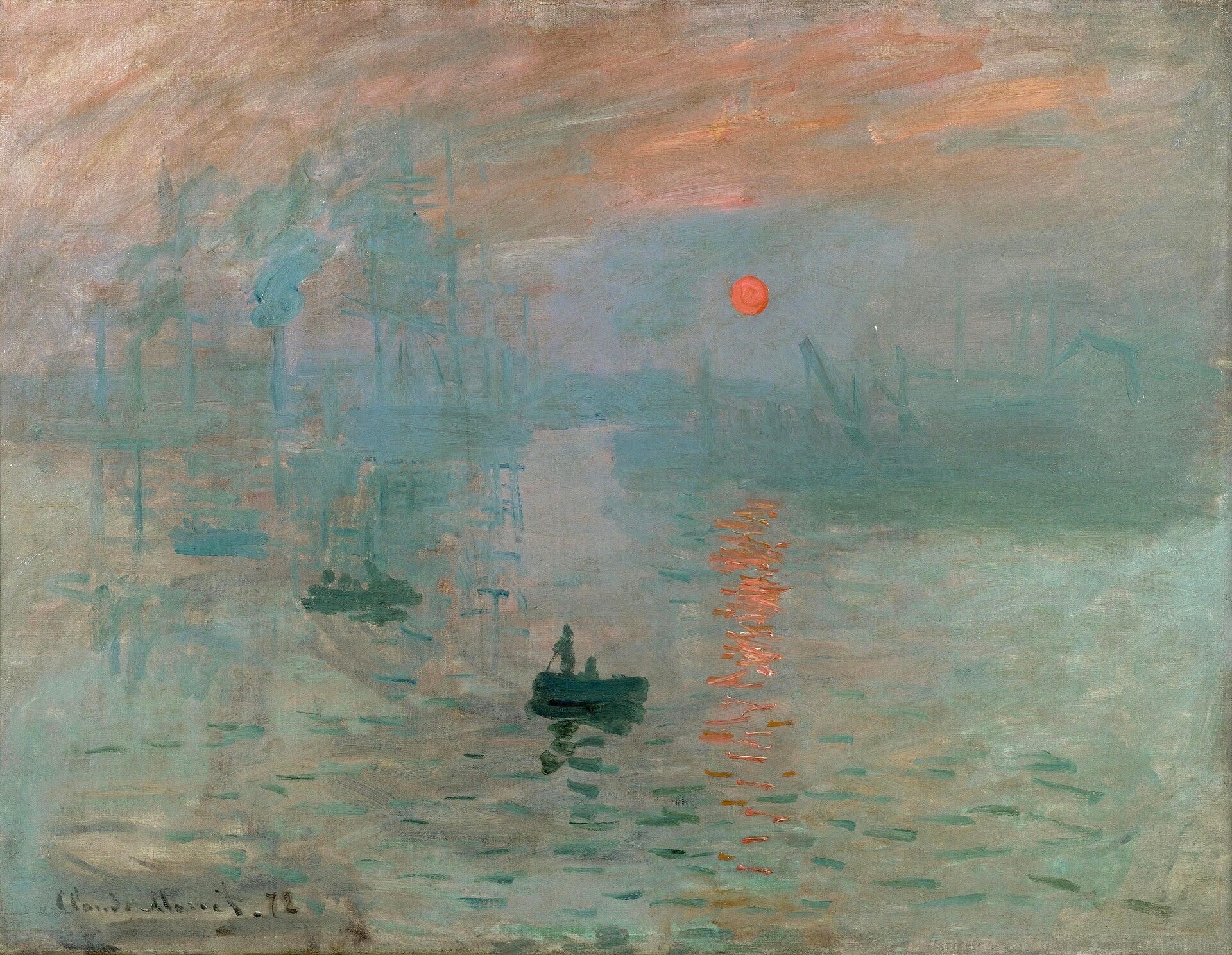
“Impression — I was certain of it. I was just telling myself that, since I was impressed, there had to be some impression in it — and what freedom, what ease of workmanship! A preliminary drawing for a wallpaper pattern is more finished than this seascape.”
— Louis Leroy, Le Charivari, 1874
By this time, the group hereafter known as the Impressionists had evolved in such a notable direction that it could have no place amongst the neoclassical representations in mainstream art camps. It was different. The Impressionists were following a current set by their realist and romantic idols, augmented by an obsession with Japanese prints and diversified by shared discoveries in their unceasing experimentation of painting in nature.
The critics were aghast at this new form. They smeared it, and thus the impressionable public did not like what they saw.
“An exhibition of so-called ‘paintings’ has opened at the Durand-Ruel gallery. The inoffensive passer-by, attracted by the flags which adorn the façade, may go in, and if he does, finds displayed to his affrighted eyes a horrifying spectacle. Five or six lunatics, of whom one is a woman, a group of unfortunates afflicted with the madness of ambition, have got together there to exhibit their works. These self-styled artists, who call themselves ‘The Intransigents’ or ‘The Impressionists,’ take a canvas, some paint and brushes, throw some tones haphazardly on the canvas and sign the whole thing... A frightening spectacle of human vanity so far adrift that it verges on sheer lunacy.”
— Albert Wolff, Le Figaro, 1876
Despite failure and ridicule, the artists were unwavering in their determination to get the world to see. As the group was yet again planning for the third Impressionist show in 1877, Monet had an idea.3
The Scheme
Apparently, the public was not able to see anything in his Impression: Sunrise. Fog was not a fit subject for a picture, they said. So Monet doubled-down on a new motif foggier than anything yet.
Monet to Renoir:
“I’ve got it! The Gare Saint-Lazare! I’ll show it just as the trains are starting, with smoke from the engines so thick you can hardly see a thing.—I’ll get them to delay the train for Rouen half an hour. The light will be better then.”
Renoir: “You’re mad.”
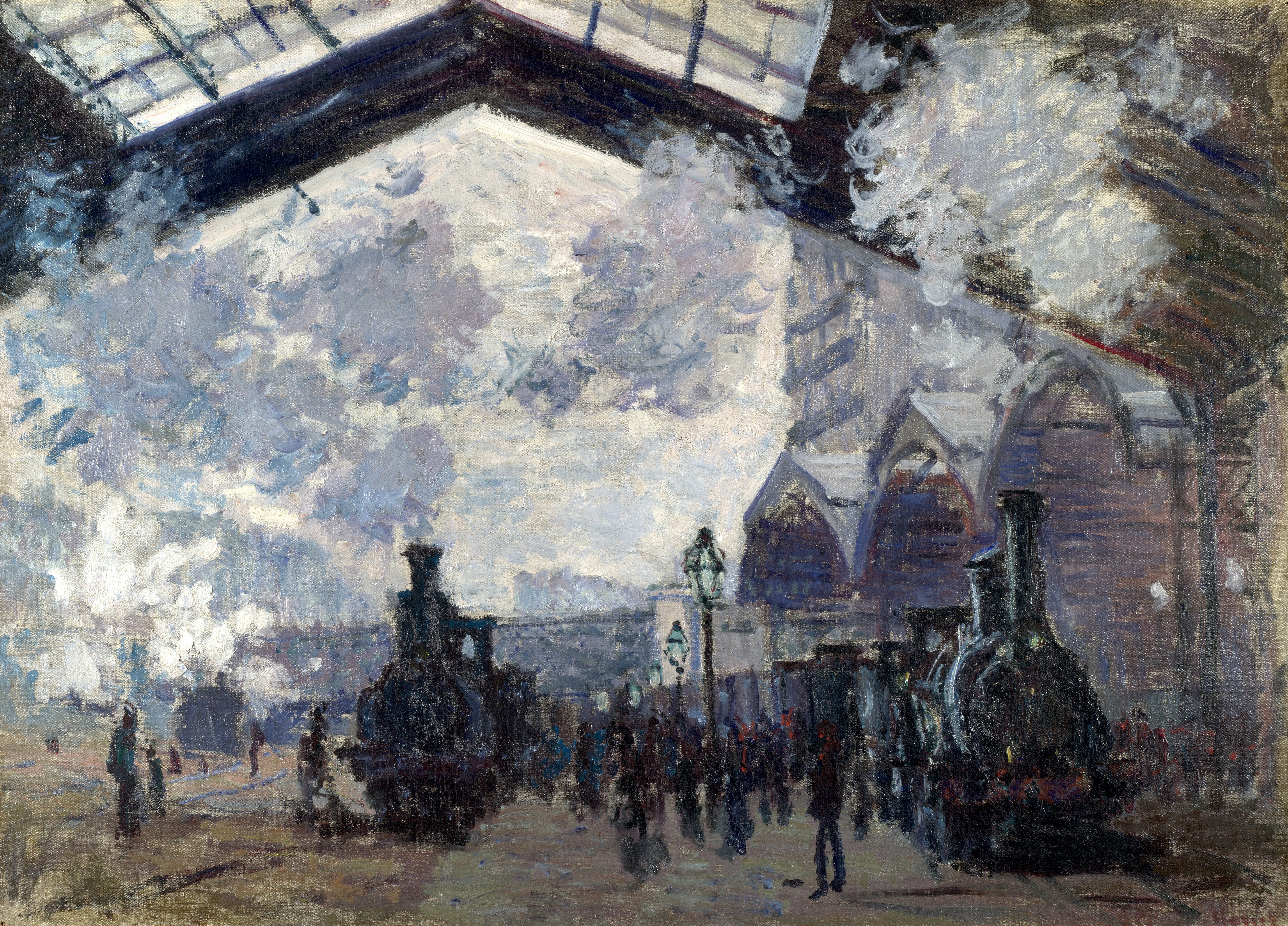
In terms of boldness, besides Van Gogh, Monet was one of the more courageous when it came to painting in challenging environmental conditions. He painted many works out in the snow and was also known to work feverishly amidst rainstorms hitting the coast.4 As daunting as painting out in harsh weather can be, painting in the bustle of an urban environment can be just as intimidating. The swarm of spectators, the violation of standard sidewalk protocols and the general franticness of the streets is enough to scare any artist away.
“I wouldn’t have dared to paint even in front of the corner grocer!”
— Renoir
He was also known to pull stunts. In the early days when he and Renoir were penniless sharing a tiny apartment in Paris, Monet also had his clothes made by the finest tailor in Paris. He would go there and put on an air of a rich man, getting dressed in fancy lace. When the tailor would demand of him money, young Monet would drop the line: “Monsieur, if you keep insisting like this, I shall have to withdraw my custom.” And thus the tailor never got paid.
He would use his pomp to finagle big turkey dinners and fine wine from the grocers, a nice change to their daily diet of beans off the stove. For brief moments they would live like kings.

So in January of 1877, Monet got his fancy laced sleeves ready for yet another scheme. He always began his paintings on the motif, and for the Gare Saint-Lazare series this would be no different. He sent a letter ahead to the offices of the Western Railway announcing that the painter Claude Monet would be arriving soon. He waltzed into the office of the director with his gold-headed cane, sat down and announced to the man:
“I have decided to paint your station. For some time I have been hesitating between your station and the Gare du Nord, but I think that yours has more character.”
The exasperated director who knew nothing of the art world and not wanting to admit it offered the artist permission to do as he liked. He had the trains halted and he cleared the platforms. They shoveled smoke into the engines to create the desired smoky effect the great artist wanted.
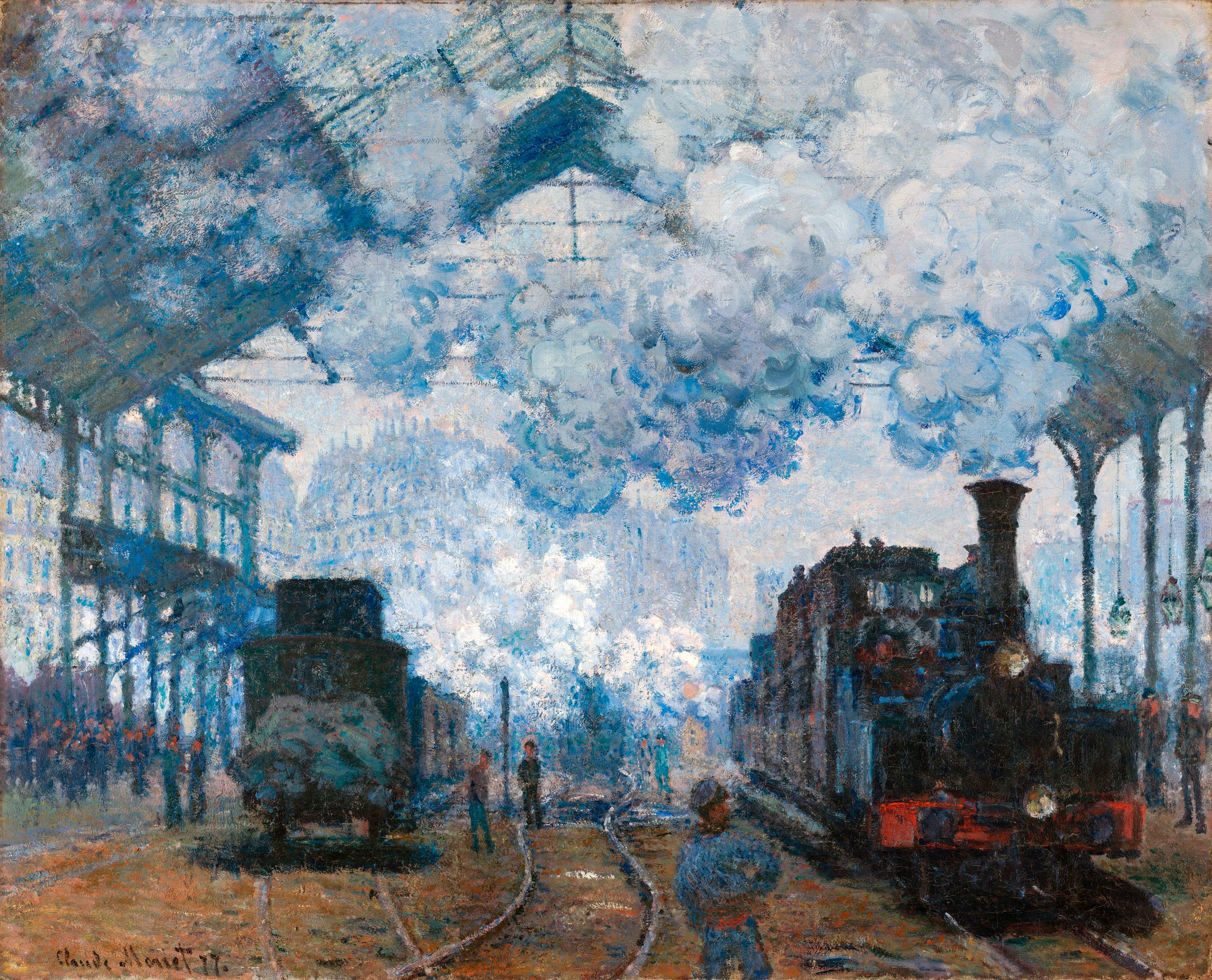
“He painted like a tyrant in respectful awe—when he finally departed with half a dozen or so pictures, the entire personnel and the director bowed him out.”
“He was born a lord.” — Renoir
As instantaneous as this event is made out to be, the reality is that it was long thought out and just the beginning of a prolonged study. Their artist friend Caillebotte who came from wealth and often gave financial support to his fellows helped Monet by renting him a studio space a stone’s throw away from the gare. At 17 rue Moncey, from January to March, Monet continued to work upon his paintings.
Character
Monet could have painted any station in Paris. They all have trains puffing out smoke and busy quays. Yet his claim was that this station out of all the others had the most character.
What gives a place character? Character brings to mind places which are a bit old and ramshackle. Places of character often have similar qualities to those of nature—a bit of noteworthy imperfection. But the Gare Saint-Lazare was modern. It is hard to imagine this solid mass would have appealed to the sort of character Monet found in his landscapes.
Perhaps it was not from the structure alone, but the space it created. With all the noise and smoke of the trains the terminal acts as a sort of cloud chamber. A little box of the atmosphere incased in glass and steel and penetrated by the light. Seeing the orange glow of the coal furnace and these puffs of cloud billowing out of the smokestacks, it is hard not to imagine that even these locomotives have a bit of character, and life.
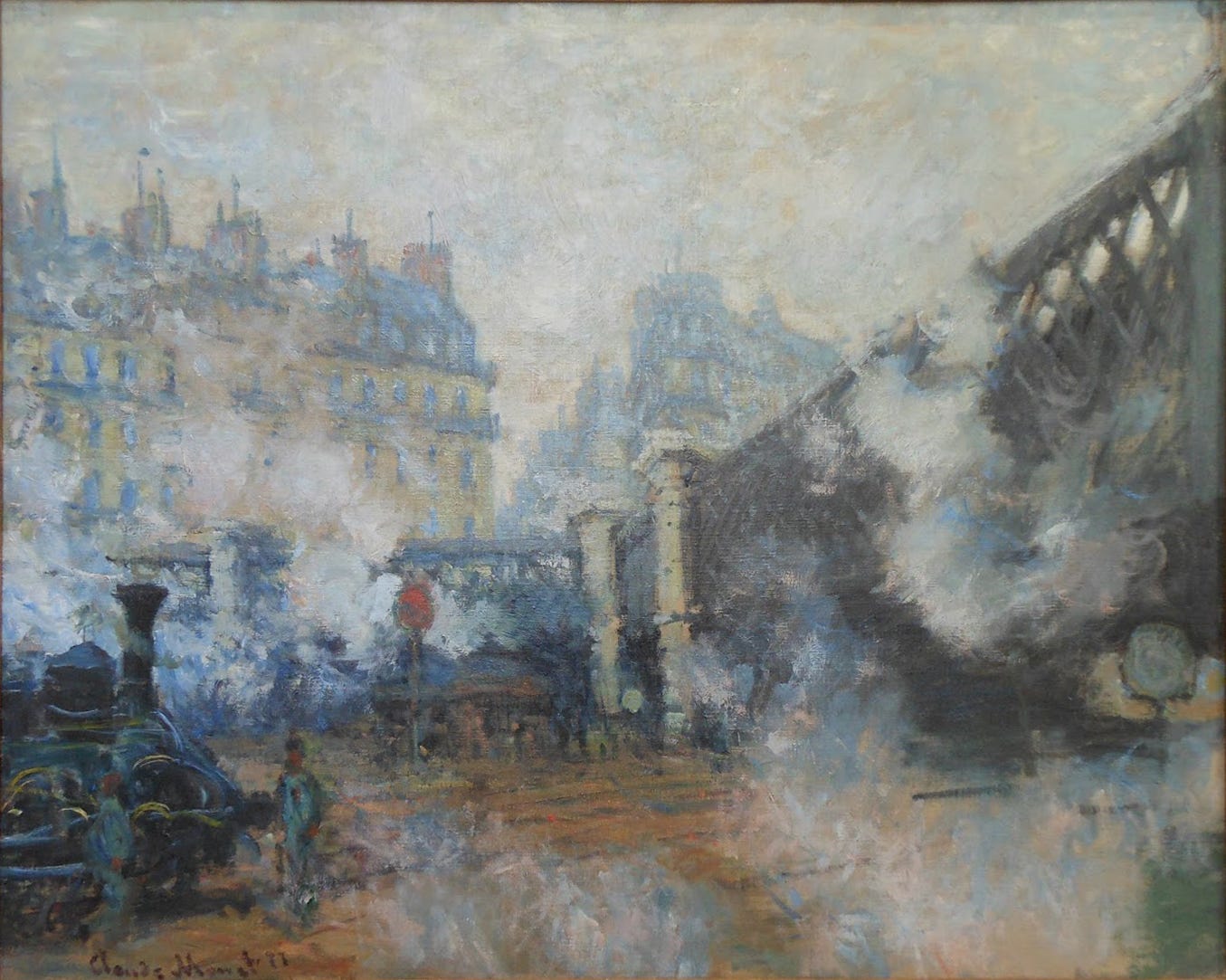
“It’s a regular dream world. A fascinating sight.”
- Monet on Gare Saint-Lazare
This kind of character unveils itself through continuous exposure. The more you can experience a place, not just visually, but to hear the whistles, to feel the heat and the wind and to smell the soot—that is the sort of thing that impresses upon your memory.
This place was familiar to the artist. It was walking out through its gates that he was born forth as an adult to the city of Paris. It was also the point of departure for many chapters of his life, off to paint new motifs and move to new places. Argenteuil, Vétheuil, Étretat, and one day to Giverny. For the artist, Gare Saint-Lazare was the quay to many adventures and returns which define his life.
Just as you might have a connection to an old corner gas station in your hometown of no particular beauty, Monet may have had kinship such as this with Gare Saint-Lazare.
Since proving fog’s worth as a subject was the stated impetus, it is obvious that Monet attempted to show to the urbanites that the wonderful phenomena of atmosphere and light exists everyday right before their eyes. Maybe if they were able to experience this here, they could begin to experience the same sensations in his landscapes as well. Maybe they could comprehend that it is more than worthy to paint things which are not solid, and in fact it is not things that are to be painted, but worlds. The world is both fluid and gaseous as much as it is solid. It all operates as one united entity when you can let go of a need for definition and certitude. What is more real and uncatchable than smoke or a cloud?
In the end he came away with at least a dozen Gare Saint-Lazare paintings, and in April 1877 he showed seven of them amongst his other landscapes.
“The strength, the animation, in short, the life that Renoir puts into his people, M. Monet infuses into things; he has endowed them with a soul. In his paintings, water laps, locomotives move, wind fills sails; plots of land, houses, everything in this great artist’s work has an intense and personal life that no one before has discovered or even suspected.—No gloomy thought ever grieves the spectator standing before this powerful painter.”
— Georges Rivière, L’Impressionniste, 1877, Review of Third Impressionist Show
1877 is no definitive climax of the Impressionist movement. It is just a threshold between chapters.
Paintings themselves act as thresholds. They are the marker of the still point of that moment in the artist’s stage of exploration. Monet did not linger forever in the train station. It was as fleeting a motif as any landscape. We all have euphoric memories of youthful wonder. Moments in life where you think, “I can’t believe that happened. But it did.” Luckily for us, Monet decided to record one of these moments of his in the form of paintings, and we get to enjoy them forever.
John Rewald, The History of Impressionism (Museum of Modern Art, 1946; rev. ed. 1973).
(See note 1)
Jean Renoir, Renoir, My Father, translated by Randolph and Dorothy Weaver (Boston: Little, Brown and Company, 1962).
Joel Isaacson, Claude Monet: Observation and Reflection (Phaidon, 1978)